Wishlist

Start here: why some symptoms matter and others you can ignore
If your face feels tight after washing or reacts to products it never used to, you may have a damaged skin barrier. The phrase damaged skin barrier refers to a weakened stratum corneum — the outermost layer that keeps moisture in and irritants out. Not every nuisance is barrier damage: occasional pimples, oiliness, or dark spots don’t automatically mean the barrier is compromised. Focus on persistent sensitivity, increased dryness, visible flaking, stinging with otherwise gentle products, and new redness as the reliable signs that matter.
What you’ll end up with: a calmer, less reactive skin surface
The goal is simple and measurable: reduce stinging and redness within 1–2 weeks, restore pliability and smoothness within 3–6 weeks, and lower daily product reactivity. The repair plan below prioritizes stopping harm, restoring lipids and hydration, and then rebuilding tolerance to active ingredients.
Quick checklist: do this first (stop and simplify)
- Immediately stop any strong actives you used recently (retinoids, AHAs/BHAs, vitamin C serums) and abrasive physical scrubs.
- Switch to a gentle, non-foaming cleanser or cleansing balm; skip double-cleansing if skin is dry.
- Trim your routine to 3 steps: cleanse, restore-hydrate (serum/essence optional), and protect with moisturizer and sunscreen during the day.
- Avoid hot showers, harsh water pressure, and long steam sessions that strip oils.
How to identify the signs: symptoms and what they mean
Watch for these specific, consistent indicators of a damaged skin barrier:
- Tightness and stinging: A sharp or burning feeling when you apply water or normally gentle products means impaired lipids and compromised barrier function.
- Redness or blotchiness: Chronic diffuse redness, not just sunburn or a pimple, suggests inflammation driven by barrier dysfunction.
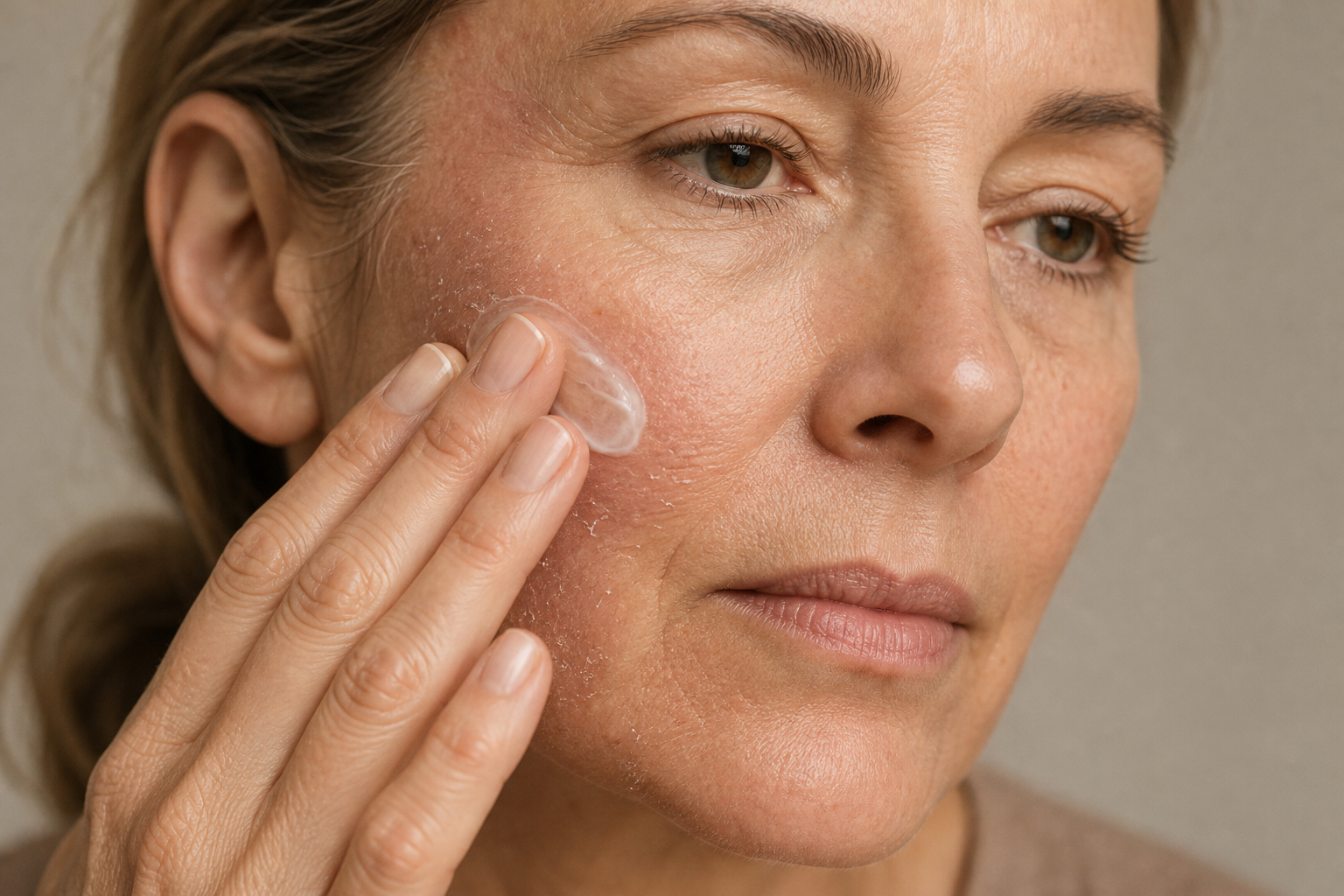
- Flaking, rough patches, or visible peeling: Surface desquamation beyond normal seasonal dryness points to accelerated water loss (TEWL).
- Heightened sensitivity to many products: A product that never bothered you now causes itch, sting or rash indicates lowered tolerance.
- Increased oil or breakouts with dry areas: Barrier damage can cause uneven sebum production — skin tries to compensate for moisture loss.
Repair roadmap: step-by-step routine to fix a damaged skin barrier
Follow these actions in order; each builds on the last.
1. Stop the damage (days 0–7)
Immediately discontinue exfoliating acids, retinoids, benzoyl peroxide, vitamin C serums, pore strips, and physical scrubs. Use lukewarm water and a soft cloth if needed. Sleep, diet and stress matter; reduce alcohol and hot beverages that can increase skin sensitivity while you repair.
2. Gentle cleansing and protection (days 0–14)
Switch to a mild, pH-balanced cleanser or cleansing balm that doesn’t foam aggressively. Pat skin dry—don’t rub. Apply a barrier-supporting moisturizer while skin is damp to lock in hydration.

3. Rebuild lipids and hydration (days 1–30)
Look for moisturizers containing ceramides, cholesterol, fatty acids, glycerin, and humectants like hyaluronic acid. These ingredients restore the lipid matrix and attract water. Apply a rich cream morning and night; add a lighter hydrating serum (glycerin or hyaluronic acid) under the cream if desired.
For a rich cream to begin rebuilding lipids and hydration, consider LuminaSkin Triple Lipid Peptide - Restore & Fix Mature Skin Advanced Anti-Aging Cream, formulated with ceramides, cholesterol, fatty acids, and peptides to help support the skin’s lipid barrier and provide deep hydration.

LuminaSkin Triple Lipid Peptide - Restore & Fix Mature Skin Advanced Anti-Aging Cream for Radiant, Smooth Skin
Features a triple-lipid formula with 2.5% ceramides, 4% cholesterol, and 2.2% fatty acids to help replenish the skin's lipid matrix, and is described as a lipid-enriched cream that provides deep, long-lasting hydration to restore and strengthen the skin barrier.
4. Reintroduce actives slowly (weeks 3–8)
After 3–4 weeks of consistent barrier support and if stinging and redness are much reduced, reintroduce one active at a time. Start with low-strength niacinamide (2–5%), which can reduce inflammation and strengthen barrier function; use it every other day for two weeks before adding anything else. Only after skin tolerates niacinamide should you consider gentle retinoids or low-concentration AHA with careful spacing.
5. Lifestyle adjustments that help long term
- Use broad-spectrum sunscreen daily; UV exposure worsens barrier damage.
- Keep bedroom humidity around 40–50% if you live in a dry climate or use heat in winter.
- Avoid over-washing the face; twice daily is enough unless you sweat heavily.
- Consider a short course of anti-inflammatory oral measures (consult your clinician) for severe dermatitis-like symptoms.
Troubleshooting: when repair stalls or symptoms worsen
If redness, open sores, oozing, severe swelling, or spreading rash appear, stop all new products and see a dermatologist — that may be contact dermatitis or infection. If progress stalls after 6–8 weeks (no reduced sensitivity, ongoing flaking), try switching to an even richer occlusive at night (petrolatum-based) and confirm you’re not unintentionally using a fragranced toner, exfoliating facecloth, or medicated shampoo that contacts the face.
- Stop exfoliants and retinoids right away.
- Switch to a gentle balm or cream cleanser.
- Use a ceramide-rich moisturizer morning and night.
- Apply sunscreen daily once irritation subsides.
- Wait 3–4 weeks before reintroducing actives—one at a time.
Focus on halting the cause, rebuilding the skin’s lipid and water balance, and slowly restoring tolerance. A consistent, simplified routine with a ceramide-forward moisturizer will usually calm symptoms within weeks; escalate to professional care if severe signs appear.
How long does it take to repair a damaged skin barrier?
Minor barrier damage often improves in 1–2 weeks with proper care; more significant repair typically takes 3–6 weeks of consistent barrier-supporting routine.
Can I use retinoids while repairing the barrier?
No — pause retinoids until stinging and redness subside, then reintroduce at low frequency after several weeks once the barrier is stronger.
Which ingredients are best for barrier repair?
Ceramides, cholesterol, fatty acids, glycerin, hyaluronic acid and niacinamide are among the most helpful; avoid strong acids and alcohol-heavy products during repair.
Is flaking always a sign of barrier damage?
Not always, but persistent flaking with tightness and sensitivity strongly suggests barrier dysfunction rather than normal seasonal dryness.
When should I see a dermatologist?
Seek professional care if you have severe pain, open sores, oozing, spreading rash, or if symptoms do not improve after 6–8 weeks of proper barrier care.