Wishlist

Answer first: the simplest effective daily plan
Protect mature skin every day by using a broad-spectrum SPF 30–50 daily, adding an antioxidant serum in the morning, wearing physical barriers (hat, UV-protective clothing, sunglasses), and reapplying or topping up sun protection when you’re outdoors for long periods. These steps prevent new sun damage—discoloration, collagen loss and thinning—while supporting skin that may already be fragile.
Why mature skin needs a slightly different daily habit
Mature skin tends to have a thinner epidermis, lower oil and natural antioxidant levels, and more visible sun damage like dark spots and broken capillaries. That changes priorities: prevention matters as much as repair, and products should favor hydration and gentleness.
Morning routine that blocks damage before it starts
Start with gentle cleansing and a hydrating layer, then follow a clear three-part morning sequence: antioxidant serum, moisturizer, and sunscreen. Apply sunscreen last and let it set before makeup.
- Antioxidant serum: choose vitamin C or a combination antioxidant to neutralize free radicals from incidental sunlight. Apply to damp skin after cleansing so it absorbs well.
- Moisturizer: pick a richer, barrier-supporting cream if your skin is dry. Ingredients like ceramides, hyaluronic acid and peptides help the skin retain moisture and appear plumper under the stress of sun exposure.
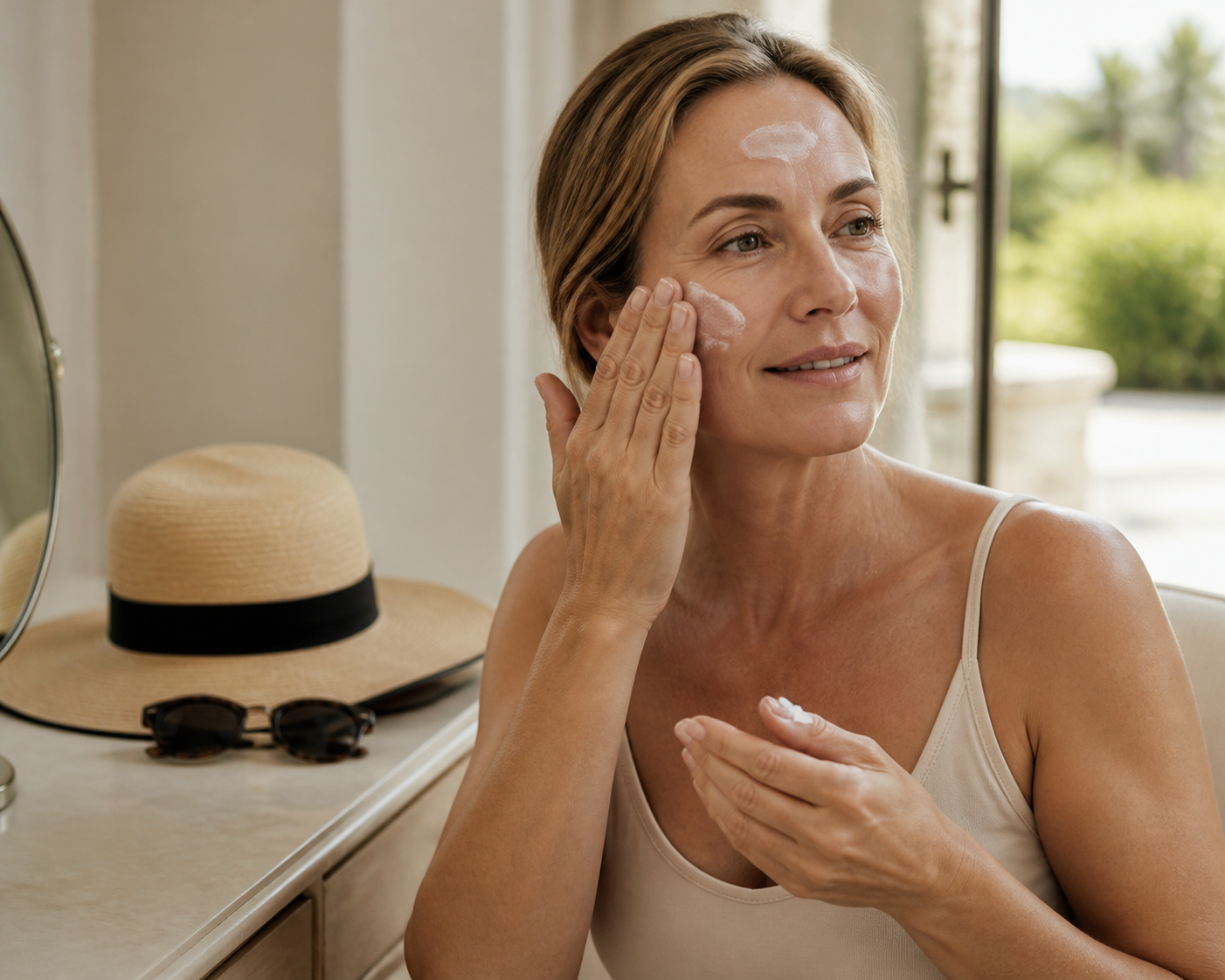
- Sunscreen: use a broad-spectrum SPF 30–50. For mature, potentially sensitive skin, mineral (physical) sunscreens with zinc oxide and titanium dioxide are often better tolerated and provide immediate protection; chemical sunscreens work too if your skin accepts them. Apply at least a nickel-sized dollop to the face and one finger-length of product per area for neck and décolletage.
How to put sunscreen on so it actually works
Many people under-apply. For the face and neck, use roughly a teaspoon (about 1.25 ml) total—more for décolletage and hands. Pat or rub the product until it’s evenly spread; wait two minutes before applying makeup. If you wear makeup, consider a mineral powder SPF or an SPF-containing foundation for daytime touch-ups.
Daily additions that matter: clothing and behavior
Sunscreen isn’t the only barrier. Choose wide-brim hats, lightweight long-sleeve shirts with UPF ratings for extended outdoor time, and large sunglasses to protect the delicate eyelid skin. Shade-seeking and timing outdoor activities to avoid peak UV (typically 10 a.m.–4 p.m.) reduce cumulative exposure more than any occasional high-SPF product.
Reapplication and boosting protection during the day
Reapply sunscreen every two hours if you’re in direct sun and immediately after sweating or swimming. For many mature skin routines this is best done with a portable sunscreen stick or compact SPF powder (gentle mineral formulas are ideal). Hands, ears, neck and scalp (if thinning hair) are commonly missed—keep a sunscreen in your bag for quick touch-ups.
Evening care that supports daytime protection
At night, focus on repair: a good moisturizer and, if tolerated, targeted actives such as retinoids (start slowly) or peptides to support collagen. Exfoliation should be conservative—over-exfoliating thins skin further. If you use prescription or strong active ingredients, follow guidance from your clinician about increased sun sensitivity and the need for stricter daytime protection.
Product recommendation that fits this routine
If you prefer a ready kit that covers cleanser, serum, and a protective cream to simplify daily consistency, consider the JLO BEAUTY 3-Step Skin Care Set, a three-piece kit with a gel-to-cream cleanser, a glow serum, and a hydrating moisturizer that streamlines morning and evening routines and helps leave skin feeling clean, balanced, and radiant.

JLO BEAUTY 3-Step Skin Care Set: Cleanser, Serum & Moisturizer, 3 Pc
This 3-piece JLO BEAUTY set includes a gel-cream cleanser, a face serum, and a hydrating moisturizer formulated with peptides and hyaluronic acid, providing a simple, all-in-one morning and night routine that covers cleansing, treatment, and protective hydration.
Troubleshooting: common issues and adaptations
- Sunscreen stings eyes: switch to a mineral formula and avoid sprays near the face; use a stick for the eye area.
- Makeup rubs off: let sunscreen set for 2–3 minutes or use a makeup primer made for use over SPF.
- Skin flares (rosacea/sensitivity): patch-test new sunscreens; physical sunscreens and fragrance-free formulas reduce irritation.
- Hyperpigmentation persists: persistence and combination therapy (consistent SPF, topical vitamin C in the morning and targeted brighteners at night) is necessary; expect months for visible improvement.
Small adjustments by activity and season
Indoors by a south-facing window still receives UVA; wear daily SPF year-round. In winter or on cloudy days, maintain the same routine—UVA penetrates clouds and glass. If you spend multiple hours gardening or near reflective surfaces (water, snow), step up to SPF 50 and add a shirt with UPF 50+.

When to consult a professional
See a dermatologist for new or changing spots, persistent redness, or if you plan to start strong actives (retinoids, prescription lightening agents). They can tailor photoprotection advice for thinning skin, photosensitivity from medications, or post-procedure care after laser or chemical treatments.
- Apply broad-spectrum SPF 30–50 every morning (face, neck, hands).
- Use an antioxidant serum before sunscreen on most mornings.
- Carry a portable sunscreen for reapplication after two hours.
- Wear a wide-brim hat and UV-blocking sunglasses outdoors.
- Choose UPF clothing for prolonged sun exposure.
- Adjust to SPF 50 and extra barriers near water, snow or high altitudes.
Protect mature skin primarily by wearing daily broad-spectrum SPF, complementing it with antioxidants and richer moisturizers, and using physical barriers like hats and UPF clothing. Consistency—applied every day and re-applied when needed—prevents further sun damage and preserves skin resilience.
Is mineral sunscreen better for mature skin?
Mineral sunscreens (zinc oxide/titanium dioxide) are often better tolerated by sensitive, thinning or reactive mature skin because they sit on the surface and block UV mechanically rather than penetrating the skin.
How much SPF do I really need daily?
SPF 30 blocks about 97% of UVB; SPF 50 about 98%. For everyday protection choose at least SPF 30, and step up to SPF 50 for prolonged outdoor time or highly reflective environments.
Can I use makeup with SPF instead of sunscreen?
Only if you apply enough. Most people don’t apply sufficient foundation to reach the labeled SPF, so use a dedicated facial sunscreen first and consider SPF makeup for touch-ups.
Does sunscreen prevent age spots already present?
Sunscreen prevents new spots and helps existing ones stop worsening; combined treatments (retinoids, topical brighteners, procedures) are needed to fade established pigmentation.
How does sun protection change after cosmetic procedures?
After lasers, peels or microneedling, skin is more UV-sensitive. Use strict, immediate sun protection—broad-spectrum mineral SPF and physical barriers—and follow your provider’s timeline for reintroducing actives.