Wishlist

It’s a familiar scene: you wake, splash water on your face, notice dull, rough patches and perhaps dry flaking around the nose or chin, and wonder if a scrub or peel will take years off your complexion. Exfoliating mature skin can improve texture and allow serums to absorb better — but done wrong it worsens sensitivity, dryness, and broken capillaries. This guide answers the key questions and gives clear, practical steps so you can exfoliate safely and confidently.
Short answer: what’s safe and effective for exfoliating mature skin
Choose gentle chemical exfoliation (low‑strength AHAs like lactic acid or glycolic acid, or a mild BHA) over abrasive scrubs. Limit exfoliation to 1–2 times per week at first, patch-test new products, pair exfoliation with good hydration and sunscreen, and avoid exfoliating on the same nights you use strong retinoids or harsh physical treatments.
How to pick between chemical and physical exfoliation
Chemical exfoliants dissolve the glue between dead cells; physical exfoliants mechanically slough them off. For mature skin, chemical options are generally safer and more consistent:
- AHAs (lactic acid, glycolic acid): hydrate slightly while removing surface cells. Lactic is gentler and often better for drier, mature skin.
- BHA (salicylic acid): oil‑soluble and helpful if you have occasional clogged pores or oily spots; can also reduce redness caused by congestion.
- Enzyme exfoliants (papaya, pineapple): gentle alternatives for sensitive skin, working without acid strength.
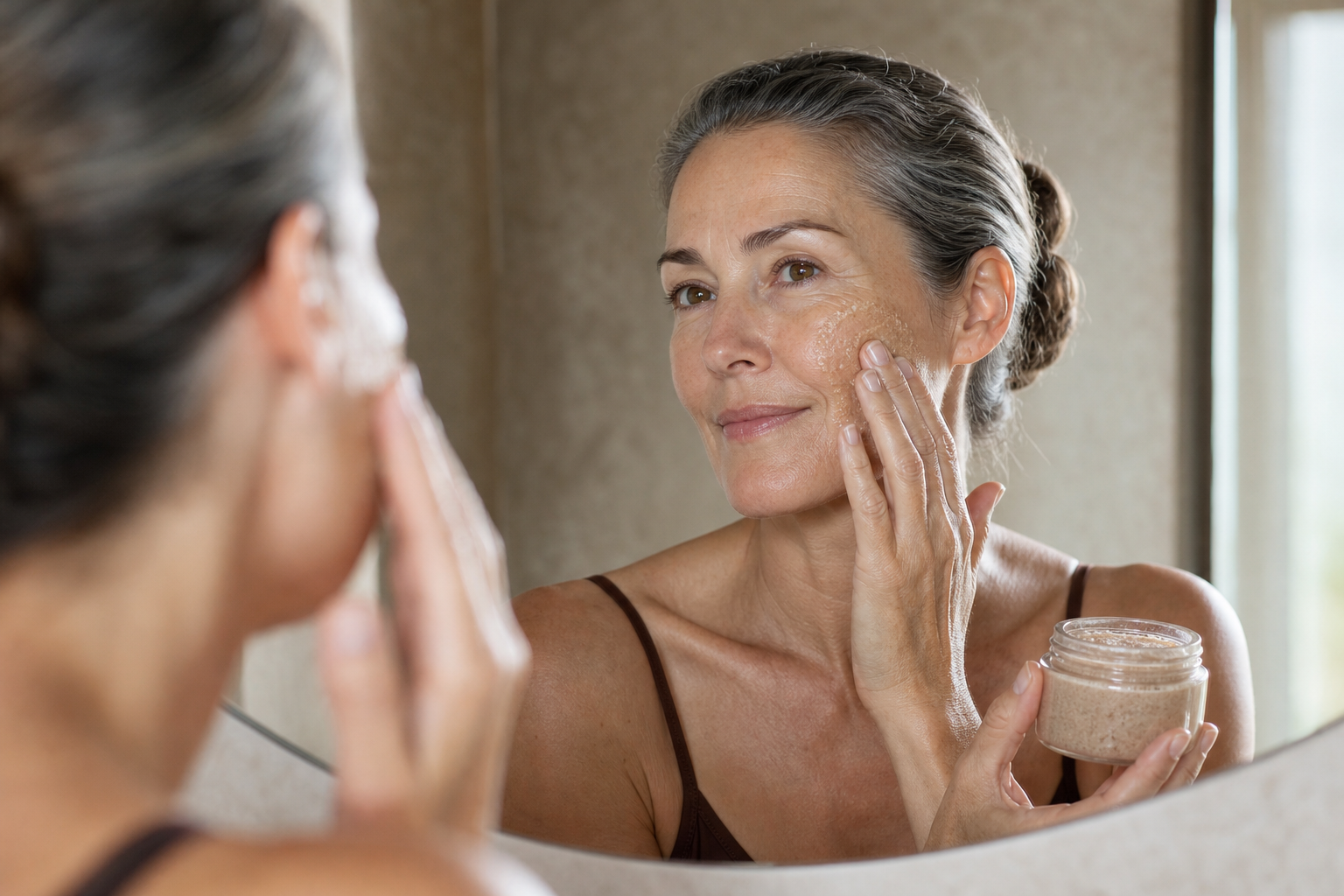
- Physical scrubs: avoid coarse scrubs (crushed shells, large beads). If you prefer tactile exfoliation, use a soft konjac sponge or a finely milled, creamy polish once every 7–10 days and press gently rather than scrubbing.
Choosing concentration and frequency
Start low and slow. For over‑50 or very dry skin, begin with 5–10% lactic acid or 5% glycolic acid used once weekly. If tolerated, increase to 10–12% or twice weekly. For BHA, a 0.5–2% leave‑on product once or twice weekly is typical.
Signs to reduce frequency: persistent stinging, long‑lasting redness, increased flaking, or new sensitivity. If those occur, pause exfoliation for a week and rebuild with lower concentration or frequency.
How to build exfoliation into your routine (practical sequence)
- Cleanse with a gentle cream or hydrating cleanser to avoid stripping oils.
- Do a patch test behind the ear or on the jawline for 3–5 days before full-face use.
- Apply the exfoliant as directed — leave‑on AHAs/BHAs are usually applied to dry or slightly damp skin; follow product instructions.
- Wait 5–10 minutes if you use water-based serums next; then apply hydrating serums (hyaluronic acid) and an emollient moisturizer to lock in moisture.
- In the morning after any night exfoliation, apply broad‑spectrum sunscreen of at least SPF 30 every day — exfoliation increases UV sensitivity.
Combining exfoliation with retinoids, vitamin C and other actives
Exfoliation can increase penetration of other actives — that’s useful but can also raise irritation risk. Practical pairings:
- Retinoids: avoid using strong retinoid nights and chemical exfoliant nights together. Alternate: retinoid 2–3 nights/week and AHA/BHA 1–2 nights/week on separate days.
- Vitamin C: morning vitamin C serums can follow a routine that includes occasional night exfoliation; they’re generally compatible if your skin tolerates both.
- Peptides and ceramides: safe to layer after exfoliation to support repair and barrier function.
What to use after exfoliation to protect mature skin
After exfoliating, the next products matter as much as the exfoliant:
- Hydrating serum (hyaluronic acid) to pull water into the skin.
- Barrier‑repair moisturizer with ceramides, cholesterol, glycerin, or squalane to restore lipids and prevent TEWL (transepidermal water loss).
- Daily sunscreen — mineral or chemical — applied every morning and reapplied when outdoors.
When to avoid exfoliation or see a professional
Pause exfoliation if you have open wounds, active cold sores, sunburn, rosacea flares, eczema patches, or recently had in‑office resurfacing (microneedling, laser). If you’re unsure about thinning skin, visible broken capillaries, or significant sensitivity, consult a dermatologist for tailored guidance or professional chemical peels at controlled strengths.
Product suggestion for a simple, safe start
If you want a ready routine that balances renewal with hydration, the Kind Science 5‑Piece Deluxe Anti Aging Skin Care Set offers a complete day‑and‑night lineup — a gentle cleanser, Micro Exfoliant+, hydrating cream, firming serum, and overnight repair — providing fragrance‑free, cruelty‑free formulas suitable for dry and sensitive mature skin to simplify a safe start.

Kind Science 5-Piece Deluxe Anti Aging Skin Care Set for Day + Night Hydration, Anti Aging Treatment, Cleansing & Exfoliation - For Dry and Sensitive Skin - Fragrance Free, Cruelty Free
This five‑piece kit includes a gentle cream cleanser, a micro‑exfoliant, and both a hydrating day moisturizer and overnight repair cream formulated for dry and sensitive skin, providing a simple, curated routine that balances renewal with hydration.
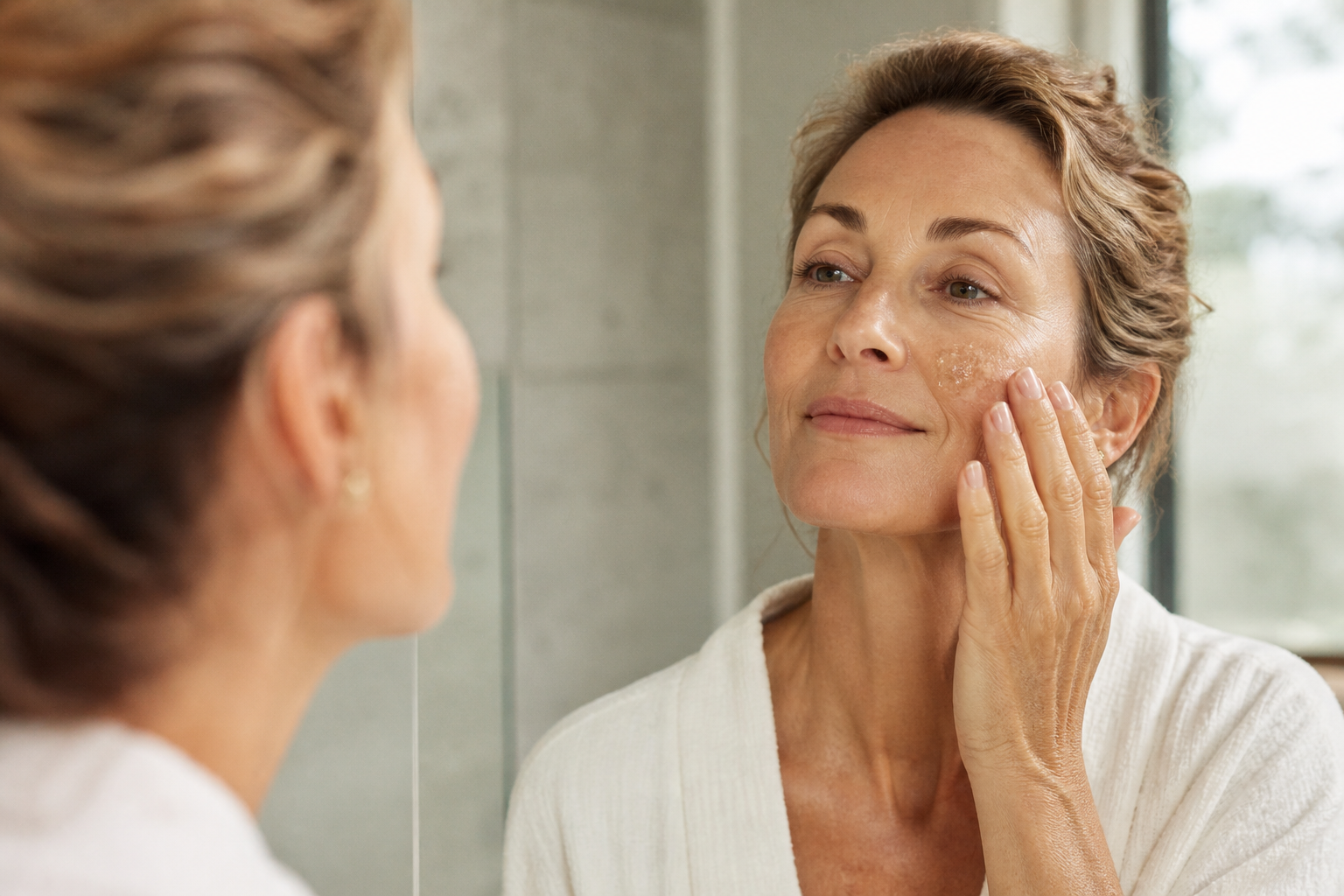
- Patch‑test new exfoliant for several days before full‑face use.
- Start with low concentration and once‑weekly frequency.
- Pair exfoliation nights with a rich moisturizer and skipping retinoid those nights.
- Apply broad‑spectrum SPF every morning after exfoliating.
- Avoid physical scrubs with large, rough particles.
- Stop and consult a dermatologist if persistent irritation or broken skin appears.
Exfoliating mature skin is beneficial when you use gentle chemical options in low concentrations, protect and rebuild the skin barrier afterward, and limit frequency. A curated anti‑aging set simplifies choices and reduces the chance of overdoing it.
How often should mature skin be exfoliated?
Start with once weekly and, if well tolerated, increase to twice weekly; many people with dry or sensitive mature skin stay at 1–2 times per week.
Is glycolic or lactic acid better for older skin?
Lactic acid tends to be gentler and more hydrating, so it’s often preferred for very dry or sensitive mature skin; glycolic is effective but can be more irritating at similar concentrations.
Can I use a scrub on mature skin?
Use very mild, finely milled physical exfoliants sparingly (every 7–10 days) and avoid hard beads or aggressive scrubbing which can damage fragile skin.
Will exfoliation thin my skin?
Properly used chemical exfoliants remove surface dead cells and do not thin living skin; overuse and harsh mechanical scrubbing can damage the barrier and increase sensitivity.
What should I do if exfoliation causes irritation?
Stop the exfoliant, increase hydration and barrier repair for at least a week, and switch to a lower concentration or an enzyme exfoliant; consult a dermatologist if symptoms persist.