Wishlist

When your face looks and feels drier after a shower, the quick fixes don’t work — what to do now
You step out of the shower, pat your skin dry and reach for your usual lightweight lotion, but your face tightens and flakes by noon. That small daily annoyance is the main sign many people notice as estrogen and oil production drop in perimenopause and menopause. The goal here is simple: restore hydration, strengthen the skin barrier and reduce irritation with a short, easy routine that fits real mornings and nights.
End result: what your skin should feel like after adjusting your routine
Within a few weeks of the right changes, expect skin that feels less tight, shows fewer flaky patches, is less reactive to cold or wind, and accepts makeup more smoothly. You won’t erase every texture or line — but you’ll stop making dryness worse with habits that strip natural oils.
Core approach: replace moisture loss, repair the barrier, simplify steps
Menopause skincare focuses on three things: adding and holding water (humectants), replenishing lipids (occlusives and emollients), and avoiding unnecessary irritation. Follow this order in your routine and choose products that perform each job without duplicating harsh actives.
Morning routine for drier, changing skin
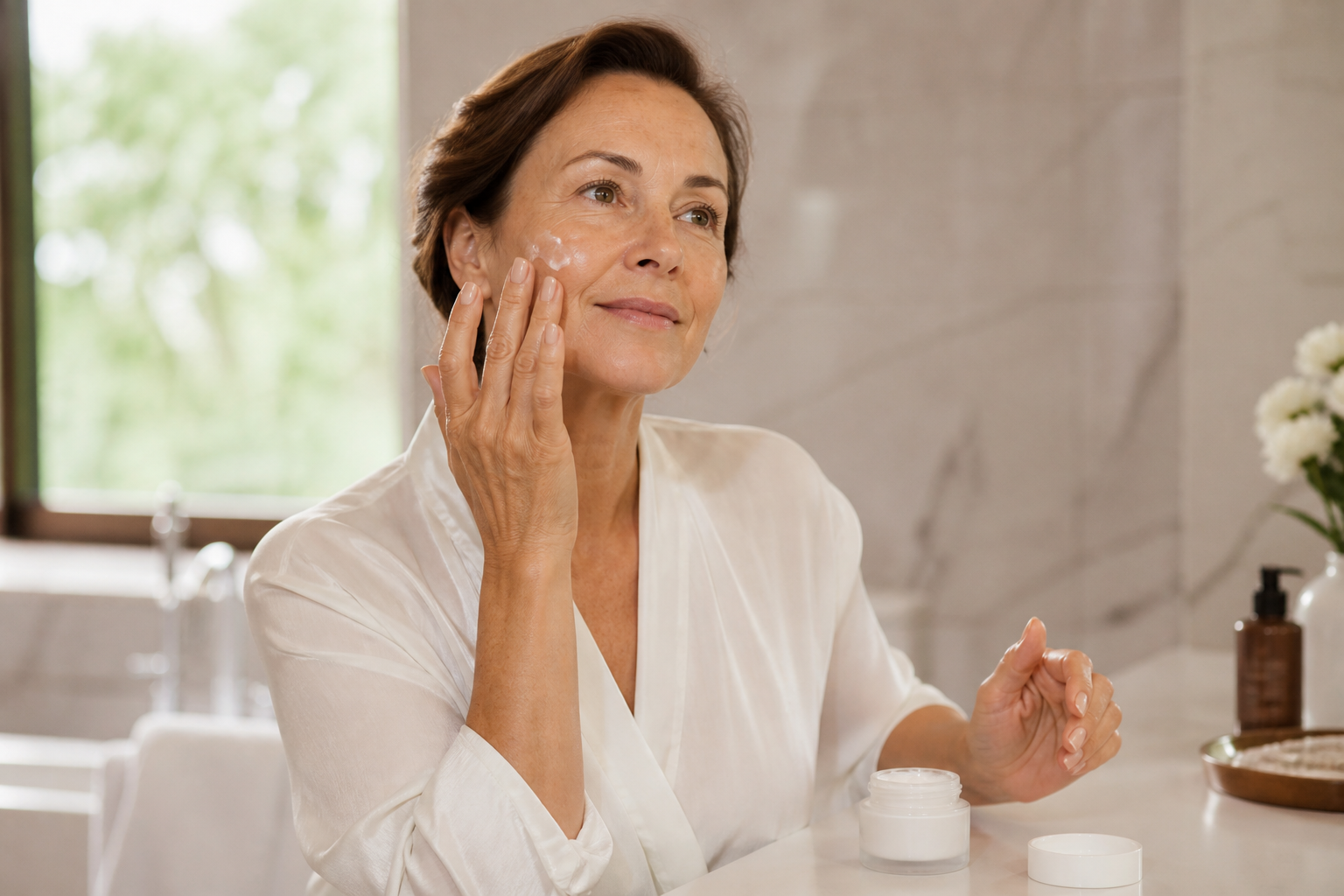
- Cleanse gently: use a balm or cream cleanser that removes impurities without a squeaky feel. Avoid foaming gels that leave skin tight. If you wear sunscreen daily, a balm or micellar milk is helpful.
- Hydrating toner or essence (optional): a water-based layer with glycerin or hyaluronic acid adds quick hydration. Pat it in — don’t rub.
- Light serum with humectant: hyaluronic acid or glycerin serums draw moisture into the upper layers. Apply to damp skin to maximize benefit.
- Barrier-support moisturizer: choose a cream containing ceramides, cholesterol, fatty acids or niacinamide. These ingredients rebuild the lipid matrix that holds moisture.
- Sunscreen: broad-spectrum SPF 30+ every day. Use a moisturizing formula or apply sunscreen over a richer cream to avoid extra drying.
Evening routine: repair and replenish while you sleep
- Double-cleanse if wearing sunscreen/makeup: start with an oil or balm to lift products, then a gentle cream cleanser.
- Targeted treatment (2–3 nights/week): if your skin tolerates it, a low-strength retinoid can help texture and firmness. Start once weekly and increase slowly. On nights you use retinoid, skip other actives like exfoliating acids.
- Hydrating serum: repeat humectant layer (hyaluronic acid) applied to damp skin.
- Rich night cream or facial oil: heavier creams with occlusives (squalane, petrolatum) or plant oils (rosehip, jojoba) lock in moisture. Press in an oil after cream for extra occlusion if skin is very dry.
Ingredient priorities and what to avoid
Prioritize: ceramides, hyaluronic acid, glycerin, niacinamide, squalane, peptide-containing moisturizers and gentle plant oils. These rebuild barrier lipids and trap moisture.

Avoid or limit: high concentrations of alcohol, strong fragrances, and frequent use of physical or chemical exfoliants that sting. Active acids (AHA/BHA) and retinoids aren’t off-limits but should be introduced gradually because menopausal skin can be thinner and more reactive.
How to choose products without guessing — a simple decision tree
- If skin feels tight after cleansing: switch to a balm or cream cleanser and add a humectant serum.
- If you still see flakes or redness: move to a richer moisturizer with ceramides and add a facial oil at night.
- If makeup separates or clings to dry patches: use an overnight mask once or twice weekly for deeper hydration and remove exfoliating steps for a month.
One practical product option to start with today
If you want a ready, doctor-recommended style kit to begin rebuilding hydration and the barrier, consider the Kind Science 5-Piece Deluxe Anti Aging Skin Care Set — a complete day-and-night collection with a gentle cleanser, micro-exfoliant, firming serum, hydration cream and overnight repair cream, fragrance-free and cruelty-free for dry and sensitive skin, so you’re not guessing ingredient compatibility.

Kind Science 5-Piece Deluxe Anti Aging Skin Care Set for Day + Night Hydration, Anti Aging Treatment, Cleansing & Exfoliation - For Dry and Sensitive Skin - Fragrance Free, Cruelty Free
This 5-piece kit includes a gentle cream cleanser, hydrating face cream and targeted serums/night repair specifically formulated for dry and sensitive skin, offering an all‑in‑one regimen (cleanse, treat, hydrate) to start rebuilding hydration and supporting the skin barrier.
Troubleshooting: changes you may need and when to see a pro
- Persistent redness or burning: stop new products and use a simple cream with ceramides and minimal ingredients; consult a dermatologist if it doesn’t improve in 2 weeks.
- Breakouts after adding oils: try non-comedogenic oils (squalane) and avoid heavy occlusives on acne-prone zones or use them only at night.
- Very thin, translucent skin or bleeding: seek medical advice — this can require prescription treatments.
- Replace foaming cleanser with balm/cream.
- Apply humectant (hyaluronic/glycerin) to damp skin.
- Use a ceramide-rich moisturizer morning and night.
- Layer sunscreen over moisturizer every morning.
- Introduce retinoids/acids slowly, only after barrier is stable.
- Use a facial oil or overnight mask for extra occlusion when needed.
Menopause skincare is about reducing loss and protecting the skin barrier: gentle cleansing, targeted hydration, and richer barrier creams. Choose one supportive kit or a few focused products and give them 4–6 weeks before changing course.
Why does skin get drier during menopause?
Lower estrogen reduces oil production and affects skin thickness and collagen, which leads to drier, thinner, more reactive skin.
Can I still use retinoids?
Yes, but start slowly (once weekly) and ensure your barrier is supported with ceramides and moisturizers; reduce frequency if irritation appears.
Which moisturizer ingredients matter most?
Ceramides, cholesterol, fatty acids and occlusives like squalane or petrolatum help restore the lipid barrier and retain moisture.
Do I need a different sunscreen in menopause?
No special sunscreen is required, but choose a moisturizing, broad-spectrum SPF 30+ formula to avoid extra drying.
When should I see a dermatologist?
If you have severe thinning, bleeding, persistent inflammation, or rapidly changing spots, book a consultation for professional assessment.