Wishlist
Start here: what actually matters and what you can ignore
If you want smoother, firmer-looking skin without dramatic irritation, focus on "peptides in skincare" that are delivered in a serum or a moisturizer and used consistently. Ignore vague marketing like “peptide complex” without any named peptides or supporting evidence, and don’t expect overnight results — peptides work slowly by signalling skin cells, not by exfoliating or chemically resurfacing.
What peptides in skincare do — the short answer
Peptides are short chains of amino acids. Topically, they act as signals or building-block precursors: some prompt collagen and elastin production, some help skin barrier repair, and others reduce visible muscle contractions (a milder, topical alternative to injectables). They’re best for improving texture, firmness and fine lines over months rather than delivering immediate peeling or tightening.
Which types of peptides matter and how they differ
- Signal peptides (for example: palmitoyl pentapeptide): stimulate collagen and matrix production to improve firmness over time.
- Carrier peptides (copper peptides): deliver trace minerals that aid enzymatic repair and antioxidant defenses.
- Neurotransmitter-inhibiting peptides (often marketed as “botox‑like”): reduce muscle contraction micro-movements that deepen expression lines.
- Enzyme-inhibiting peptides: slow collagen breakdown by inhibiting enzymes that degrade the extracellular matrix.
How to choose a peptide product for your goal
Decide the outcome first: general firmness and hydration, targeted eye concerns, or prevention of expression lines. Then pick the format that fits your routine and skin type.
- For overall anti-aging and layering: a lightweight peptide serum (fast absorption).
- For dry or mature skin: a peptide-containing moisturizer or hydrating set to lock in moisture and peptides together.
- For delicate under-eye creases: a peptide eye cream with a richer base but low fragrance.
Practical store suggestion: if you want a ready routine that includes peptides plus hydrating steps, consider the new 5-piece deluxe skincare set—a day-and-night collection that bundles a gentle cleanser, micro-exfoliant, hydrating cream, firming serum, and overnight cream—to streamline daily use.

Kind Science 5-Piece Deluxe Anti Aging Skin Care Set for Day + Night Hydration, Anti Aging Treatment, Cleansing & Exfoliation - For Dry and Sensitive Skin - Fragrance Free, Cruelty Free
This 5-piece day-and-night set pairs a peptide-containing firming serum (with hyaluronic acid) with an ultra-hydrating moisturizer, gentle cleanser, overnight repair, and micro-exfoliant—a ready routine that combines peptides and multiple hydrating steps for simpler daily use. It’s fragrance-free and designed for all skin types, including dry and sensitive skin.
How to add peptides to your routine — the step-by-step order
Follow the end result: an effective, low-irritation routine that maximizes peptide contact with skin and supports collagen-building activity.
- Cleanse — remove makeup and sunscreen with a gentle cleanser so peptides can reach the skin surface.
- Toner / light hydrating layer (optional) — if you use a hydrating toner or essence, apply it first; peptides absorb better on lightly damp skin.
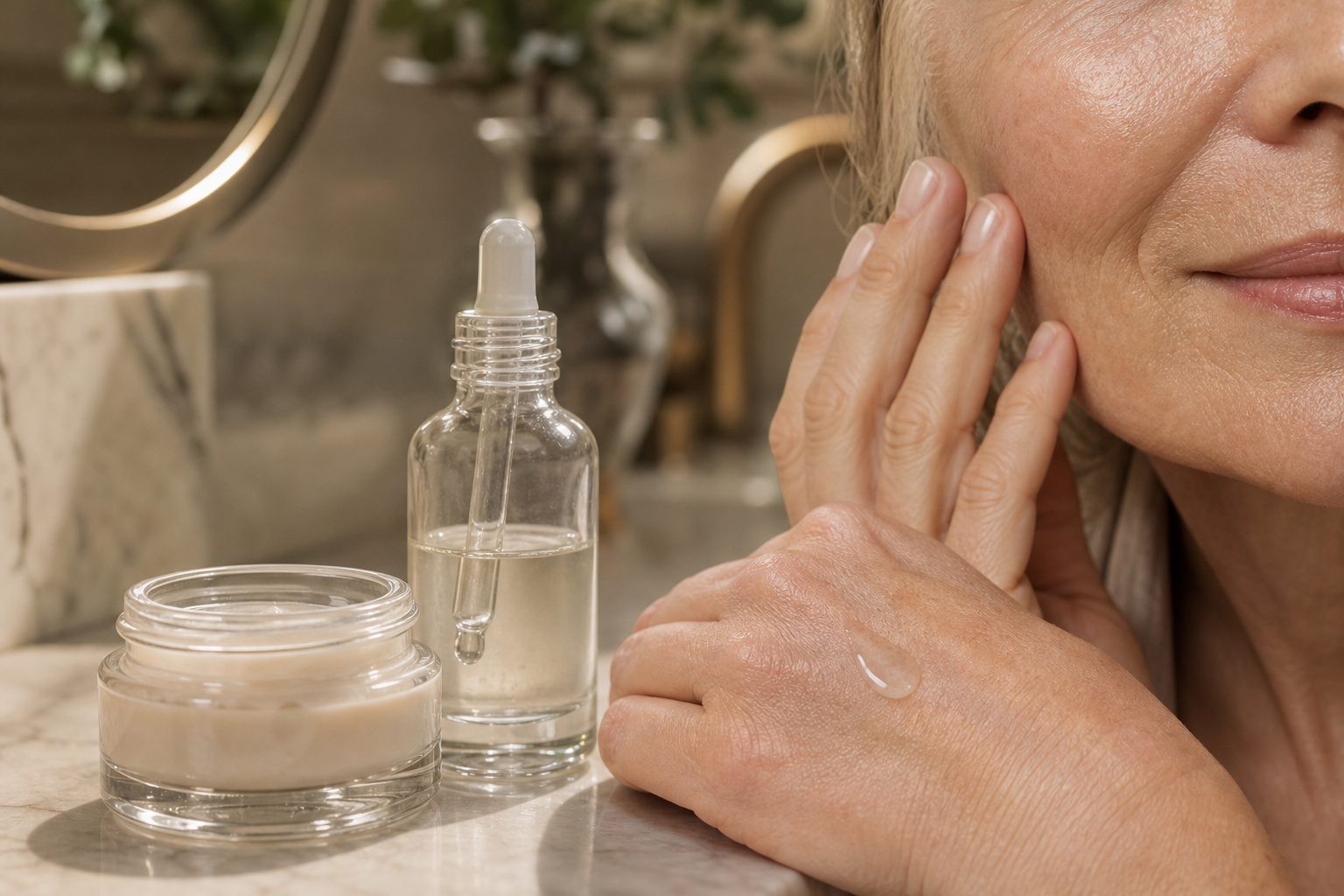
- Peptide serum — apply 2–4 drops to face and neck; pat gently. Serums are concentrated and should be the first active after cleansing.
- Targeted peptide products — if using a peptide eye cream, apply it now, before a thicker moisturizer.
- Moisturizer — seal in peptides with a cream. For dry skin choose a richer formula; for oily skin choose a lightweight gel-cream.
- Sunscreen (AM) — always finish morning routines with broad-spectrum SPF 30+; UV damage undermines collagen-building efforts.
Layering rules: what pairs well and what to avoid
Most peptides are compatible with common actives, but practical pairings matter.
- Peptides + Vitamin C: compatible and complementary — vitamin C helps collagen synthesis and antioxidant protection while peptides signal repair. Use vitamin C in the morning and peptides either AM or PM if your skin tolerates both.
- Peptides + Hyaluronic Acid: excellent — hyaluronic acid boosts hydration and helps peptides stay near the skin surface.
- Peptides + Retinol: generally safe to use together, but sensitive skin may do better alternating nights (retinol for resurfacing, peptides for support and recovery).
- Avoid mixing with very low pH chemical exfoliants only if the product manufacturer warns of instability; otherwise peptides are stable in typical cosmetic pH ranges.
When you’ll see results and how to measure progress
Expect subtle improvements in texture and firmness in 6–12 weeks with consistent use; measurable collagen increase takes months. Use photos (same lighting and expression) and note reduced creasing, smoother texture, and improved skin elasticity rather than immediate wrinkle “removal.”
Troubleshooting and adapting to skin sensitivity
If you see irritation, identify whether it’s the peptide product or another active in the formula. Try:
- Pausing other actives (vitamin C, AHA/BHA, retinol) for a week while using only the peptide product.
- Applying peptides every other day and gradually increasing frequency.
- Switching to a peptide cream with a richer emollient base if the serum feels drying.
Who benefits most from peptides and when to see a professional
Peptides suit most skin types seeking gradual anti-aging benefits, especially people who can’t tolerate strong exfoliants or high-strength retinoids. See a dermatologist if you have active inflammatory skin conditions, planned cosmetic procedures, or if you want prescription-strength collagen-stimulating treatments.
Practical product-fit checklist before you buy
Look for:
- Named peptides (palmitoyl, acetyl, copper peptides) in the ingredient list.
- Concentration information or position in the ingredient list — earlier placement usually means higher concentration.
- Minimal fragrance and alcohol if you’re sensitive.
- Complementary hydrators like glycerin or hyaluronic acid in the formula.
- Confirm named peptide(s) appear on the ingredient list.
- Choose a serum for layering or a cream for dry skin.
- Plan to use daily for at least 8–12 weeks before judging results.
- Pair with SPF in the morning and hydrators (HA, glycerin).
- Introduce concurrently with retinol only if your skin tolerates both.
Peptides in skincare are realistic, low‑irritation tools for improving texture, firmness and fine lines over months. Start with a peptide serum used consistently under your moisturizer and sunscreen, and adapt frequency or product texture if you experience sensitivity.
Are peptides better than retinol?
They serve different roles: retinol promotes cell turnover and visible resurfacing, while peptides primarily signal repair and support collagen; they are often complementary rather than direct substitutes.
Can peptides rebuild lost collagen?
Topical peptides can stimulate collagen synthesis modestly but won’t fully restore significant collagen loss; they help improve appearance over time when used consistently.
Can I use peptides every day?
Yes, most peptides are designed for daily use; start slowly if you use other actives and increase to daily as tolerated.
Do peptides work on sensitive skin?
Many peptides are well tolerated; choose fragrance-free formulations and test a patch if you have reactive or eczema-prone skin.
How do I layer peptides with vitamin C?
They can be layered: vitamin C in the morning, peptides either AM or PM; if using both at once, monitor tolerance and apply vitamin C first, then peptides once absorbed.